By Ahmad Hathout
A letter to the Federal Court of Appeal this month signaling the federal government’s intention to eliminate the CRTC’s base contribution requirement on streamers is not causing panic among some creatives, who say they want to see the government’s new policy direction before drawing conclusions.
The attorney general informed the court on July 17 of the federal government’s “intention is to eliminate the base contribution requirement on streaming services and to provide government funding to replace those contributions.” The five-per-cent financial obligation levied on streamers in 2024 was expected to draw some $200 million into the system. Major foreign streamers, including Netflix, Apple, Amazon, and Spotify, challenged the requirement at the Federal Court of Appeal, which has yet to make a decision on the matter.
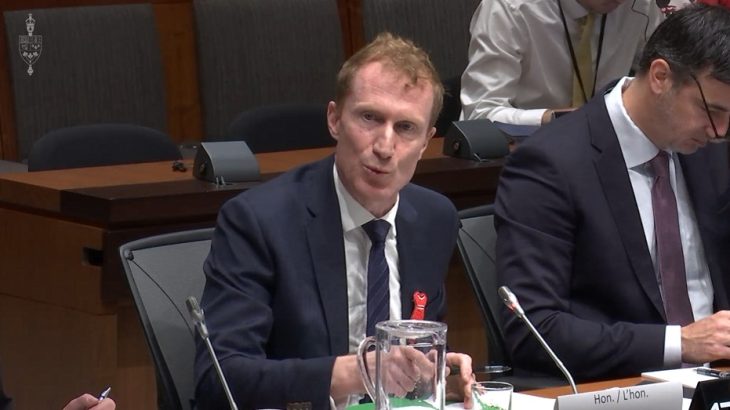
That decision, in fact, could be made moot. The AG’s letter, first reported by The Wire Report, was prompted by the court asking the AG for an update on the federal government’s intentions after Culture Minister Marc Miller, concerned about the prospect of higher streaming service prices on Canadians, forced the CRTC last month to revisit a May decision increasing streamer obligations to 15 per cent and announced a $600-million injection in what now appears to be a substitute.
Crucially, the federal government, in the middle of free trade talks with an American side disappointed with Canadian regulation, is expected to announce a new policy direction to the CRTC – slated to be published for consultation “in the coming weeks,” according to the letter – that will emphasize the need for the regulator to consider affordability of services and flexibility in how undertakings contribute to Canadian content (the CRTC already has a system for in-kind contributions).
“If the basis of the consolidated applications and appeals disappears or fundamentally alters, the Court will issue another direction calling for submissions on the issue of mootness and, if so, whether the matters should be decided,” Justice David Stratas said in directions to AG on June 29.
In the meantime, some creatives are not pushing the panic button just yet.
“Despite the Attorney General’s assertions to the Federal Court of Appeal on the future of foreign streamers being required to contribute as Canadian broadcasters do, we have yet to see the substance of any policy direction from the government,” Kevin Desjardins, president of the Canadian Association of Broadcasters, said in a statement.
“The language in the letter does not align with what we have heard from the government, and we believe it would be premature to reach any definitive conclusions from this administrative communication between the Court and one of the respondents,” added Desjardins, who represents the interests of the largest private broadcasters. “As a respondent in these appeals, the Canadian Association of Broadcasters intends to ask the Court to see this process through to a decision on the facts of the case as presented.”
Reynolds Mastin, president and CEO of the Canadian Media Producers Association (CMPA), similarly said the organization that represents independent producers is “still waiting on the specifics of the policy direction, but the Canadian government must continue to stand up for Canadian stories. That means requiring foreign streamers to invest a portion of the significant revenue they generate from Canadian audiences back into Canadian content.”
Others, however, warn that there must be a consistent stream of money coming into the system to sustain it.
“The government must permanently guarantee the funding that the audiovisual and video sectors were entitled to expect under this core contribution, estimated at a minimum of $200 million annually,” Hélène Messier, francophone co-chair of the Coalition for the Diversity of Cultural Expressions (CDEC) and president and CEO of the Quebec Association of Media Production (AQPM).
“Simply replacing the existing funds will not suffice; this funding must also keep pace with the growth in revenue from online streaming services,” Messier said, adding the news raises “serious concerns” about how “equitable participation” by all players will be achieved now. “Without such a commitment, the audiovisual and video sectors will see their funding gradually erode, even as the value created by these platforms continues to increase.
“The government must therefore ensure that the directives it gives to the CRTC as part of the announced review of its decision will establish a sustainable, predictable, and cyclical-proof funding mechanism so that foreign online streaming platforms contribute their fair share to the production of Canadian content,” she concluded.
Canadian Heritage, which had prepared scenarios for whichever way the court would go on the base contribution matter, did not respond to a request for comment about whether the government is going to endevor to make public funding permanent in lieu of base contributions.
Neal McDougall, assistant executive director and director of policy of the Writers Guild of Canada, said the organization sees the contents of the AG’s letter as representative of the government’s earlier announcement asking the CRTC to revisit its May decision.
“As we said then, government funding cannot be a substitute for a stable and enduring framework of obligations for foreign streaming services and broadcasters to invest in Canadian stories and creators in the market those services profit from,” McDougall said. “We must keep building on the foundational work done to date through the Online Streaming Act and its implementation.
“If the Government intends to eliminate the base contribution and issue a new policy direction, then it must come back with a new approach to ensure that streamers make meaningful contributions to the creation and presentation of Canadian programming,” he added. “During the process of passing the Online Streaming Act into law, the Liberal Government touted $1 billion in new annual spending on Canadian programming that would result from the bill. The Government needs to stick to its plan, and ensure Canadian cultural sovereignty is properly protected.”
How much of an impact the upcoming policy direction will have on the future of the CRTC’s implementation of the Online Streaming Act is yet to be seen. The relationship between the two, in fact, is an issue currently before the same court.
SaskTel was granted by the Federal Court of Appeal leave to challenge a decision by the CRTC mandating access by competitors to its fibre network. The telco argues there is an inherent conflict between section 10 of the 2023 cabinet direction, which orders the regulator to specifically mandate aggregated fibre access, and section 8 of the Telecommunications Act, which only gives cabinet the power to issue directions of “general application on broad policy matters.”
The AG, however, is warning that the court is at risk of adopting a “narrow interpretation” of section 8, which could “significantly hamper the achievement of the government’s telecommunications policy goals” by effectively cutting off cabinet’s ability to “proactively direct the CRTC.” The risk, according to the AG, is that “decisions taken by the regulator would be inconsistent with, or contrary to the government’s broad policy objectives,” which, it said, could have implications on the cabinet direction power broadly, such as on the government’s influence on broadcasting matters like this one here.
Foreign streamers had warned the CRTC during the initial phase of the regulator’s multi-part proceeding to implement the new Broadcasting Act that levying a base contribution would put at risk existing partnerships these streamers have with Canadian talent on co-productions inside the country.
Despite that, a CRTC official said last year that some of the base contribution money suspended by the current appeal had been released to recipients.
The U.S. Chamber of Commerce and the Canadian affiliate of the Motion Picture Association — which includes among its members Netflix, Amazon, Sony Pictures, Universal Studios, Paramount, The Walt Disney Studios, and Warner Bros. Discovery and said it was “encouraged” by the government’s order to revisit the May decision — did not respond to a request for comment.
Screenshot of Culture Minister Marc Miller