Announces $600M in new money for broadcasting system
By Ahmad Hathout and Linda Stuart
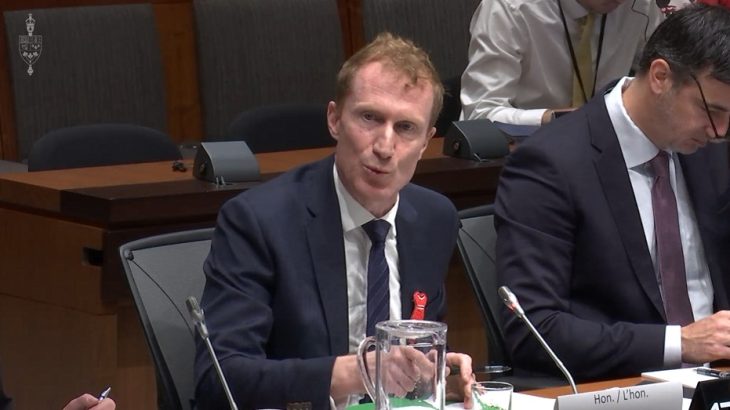
Culture Minister Marc Miller announced Wednesday that he is directing the CRTC to review its recent decision to regulate online streamers and Canadian broadcasters, which sets out mandatory contributions toward the broadcasting system.
The CRTC’s new requirements, which raises to 15 per cent the financial obligation on foreign streamers, “would impose new costs on the companies providing these services, which could ultimately fall on Canadian consumers through higher prices,” said a Canadian Heritage press release Wednesday. The regulator reduced the amount Canadian private broadcasters must pay into the system — from between 30 and 45 per cent to at least 25 per cent — but imposed specific spending requirements on the highest earners. The CRTC expected the new rules to bring a steady $2 billion into the system.
The government plans to develop new policy directions to adjust the implementation of the Online Streaming Act, the press release added, with an aim to keep streaming and broadcasting services affordable for Canadians, uphold consumer choice by protecting a healthy and diverse audio and audiovisual sector, ensure flexibility for both online streamers and Canadian broadcasters, and leverage new government investments to maintain strong support for Canadian stories, local news, French-language content, indigenous storytelling, content created by and for equity-deserving groups and official language minority communities, and services of exceptional importance, including CPAC, APTN and TV5/Unis.
Immediately following the release of the CRTC’s decision last month, Miller said on X: “We are reviewing the CRTC decision. As we carefully assess its impacts, it will always be paramount to ensure that Canadians continue to see themselves reflected on screen, hear Canadian voices, and celebrate what makes this country unique.”
The last Online Streaming Act direction to the CRTC, in 2023, ordered the regulator to regularly review expenditure requirements “to ensure that they are proportional to their objectives”; provide flexibility for all registered broadcasters to meet the requirements; consider diversity of ethnocultural groups, including indigenous and minority groups; ensure it takes into consideration the challenges involved in making French-language programming; ensure support for local news and current events programming; and support activities and services such as training and development conferences that support Canadian creators.
The CRTC’s decision drew backlash from the United States, which is currently in trade renewal talks on CUSMA. The Canadian Affiliate of the Motion Picture Association (MPA – Canada), which represents major foreign streaming giants, told Cartt after the CRTC’s decision that, “This burdensome framework unfairly targets global streamers with requirements that directly violate Canada’s obligations
On Wednesday, the organization said: “Today’s announcement acknowledges that the CRTC’s proposed framework for investment obligations needs to change. We are encouraged by the government’s commitment to new policy directions. While certain concerns about the Online Streaming Act’s framework for global streamers remain unresolved, we look forward to engaging with leaders in Ottawa to develop a new approach to supporting Canadian stories.”
The industry is still waiting for a decision from the Federal Court of Appeal about whether streamers have to pay into the system a base contribution of five per cent, which is part of the new 15 per cent.
The U.S. Chamber of Commerce said the decision moved in the “opposite direction” of flexible regulation on American streaming services by “imposing rigid, one-size-fits-all obligations that appear designed to single out U.S.-headquartered services and give the Canadian government editorial control over core business functions,” such as discoverability expectations.
“The U.S. Chamber urges the Government of Canada and the CRTC to reverse course and adopt a more evenhanded and technology-neutral framework—one supporting Canadian cultural objectives without creating discriminatory barriers that harm innovation, cross-border trade, and the Canada–U.S. economic relationship.”
In March, Republican Congressman Lloyd Smucker introduced legislation that would counter the Online Streaming Act. “The Protecting American Streaming and Innovation Act would launch a Section 301 investigation into Canada’s Online Streaming Act to determine if Canada’s implementation of the law discriminates against or burdens American commerce. If so, the United States Trade Representative (USTR) is directed to take necessary retaliatory action to combat Canada’s policies,” a release on the congressman’s website said.
To provide stability and immediate support to Canada’s audio and audiovisual sectors, Miller also announced Wednesday new federal investments of $600 million, which “will ensure Canadian creators, producers and broadcasters receive the financial support they would otherwise have had as a result of the CRTC decisions,” the announcement said.
“Additional details on these investments will be announced after consultation with the sector,” it said. “Once the new CRTC rules are finalized, the level of government investment will be adjusted as appropriate.”
In a statement to Cartt on Wednesday morning, the CRTC said it “is aware that the government intends to issue new policy directions to adjust the implementation of the Online Streaming Act” and it “will review any new policy directions as they are released.”
Kyle Irving, chair of the board of the Canadian Media Producers Association (CMPA), which represents indie producers, said that the organization is concerned about this development.
“We’re still reviewing this morning’s developments, but with this announcement we are concerned that the federal government has sold out Canadian culture in favour of big US tech interests. If the DST file taught us anything, it is that concessions with nothing in return, only result in demands for more concessions,” Irving said, referring to the three-per-cent Digital Sales Tax that was eventually rescinded in light of trade talks.
“Since US streamers entered Canada a decade ago, they have consistently raised their prices on Canadian subscribers, year after year,” Irving continued. “Make no mistake, this will continue regardless of any government action. The question we must ask is should US streamers, who’ve made tens of billions from Canadian audiences, also be required to invest in Canadians telling Canadian stories?
“Prime Minister Carney must stand up for Canadian stories, Canadian labour, Canadian independent producers and Canadian cultural sovereignty. The free ride for the big US tech giants must end.”
Kevin Desjardins, president of the Canadian Association of Broadcasters (CAB), the rep for major private broadcasters, said about Wednesday’s decision: “From the outset of the discussions around the Online Streaming Act, Canada’s broadcasters have asked that there is fairness between their obligations and those of streaming services. We believe that the government’s announcement today is an important step to moving the implementation of these new rules forward within a balanced and expeditious manner.
“We cannot allow these importnat investments in vital Canadian media, including local and national news, to be delayed any further,” Desjardins added. “We are hopeful this announcement will address the concerns of broadcasters and streamers equally, immediately, and for the long term.”
The Alliance of Canadian Cinema, Television and Radio Artists (ACTRA), the national union for performers in recorded media, said in a statement that it is “shocked” by the decision to “dismantle the contribution obligations for foreign streaming giants and instead replace those investments with a $600 million taxpayer-funded investment for Canada’s broadcasting and cultural sector,” calling the new money a “backdoor ‘subscription increase'” that does not benefit Canadians, but “appeases American corporate interests.”
“We endured years of debate to finally get an Online Streaming Act that would require billionaire-owned streamers to pay the bare minimum into Canadian culture,” ACTRA National President Eleanor Noble said in the statement. “We thought we were finally there. Instead, today’s decision lets billionaire streamers and studios completely off the hook. Rather than requiring wealthy media companies to modestly invest in Canada’s cultural ecosystem, Ottawa has chosen to transfer that responsibility to Canadian taxpayers under the guise of ‘consumer protection’.”
“Our industry was assured that culture would not be a bargaining chip in North American free trade negotiations, but this decision proves differently,” Noble added.
The Canada Media Fund told Cartt in a statement it “welcomes the government’s commitment to supporting Canadian content and the cultural sector. We take note of today’s announcement and look forward to reviewing its implications as further details become available.”
Helene Messier, president and CEO of the the Quebec Media Production Association (AQPM), a trade group representing indie film, TV and web production companies, said in a release: “While this announcement provides immediate and necessary relief to the audiovisual sector, it cannot replace a sustainable, equitable, predictable and evolving financing mechanism, protected from cyclical circumstances.”
“It is worth noting that similar financial contributions are imposed on these platforms elsewhere in the world, and these have not resulted in higher prices for consumers,” the AQPM added. “The AQPM regrets that Canada has instead chosen to absorb part of the cost in order to reduce the obligations of American platforms in the context of discussions with the United States on the USMCA, especially since the Online Streaming Act was identified as a sticking point by our southern neighbour.”
Eve Pare, executive director of the Quebec Association of the Recording, Show and Video Industry (ADISQ), called the $600 million injection “tangible relief for our businesses.
“The local music industry operates in a difficult and constantly evolving economic context, dominated by powerful foreign companies. For local music to continue to thrive, our companies need stable, predictable resources that meet the challenges,” she said, adding the organization has full confidence that the commission will put in place “a fair framework where all actors in the system, whether linear or digital, Canadian or foreign, assume their fair share of responsibility towards the culture here.”
Neal McDougall, the assistant executive director of the Writers Guild of Canada (WGC), a trade group representing English-language screenwriters across Canada, said in a statement: “The Government’s funding announcement today, while supportive of our sector, cannot be a substitute for a stable and enduring framework of obligations for foreign streaming services and broadcasters to invest in Canadian stories and creators in the market those services profit from. We must keep building on the foundational work done to date through the Online Streaming Act and its implementation.”
Screengrab of Culture Minister Marc Miller