By Ahmad Hathout
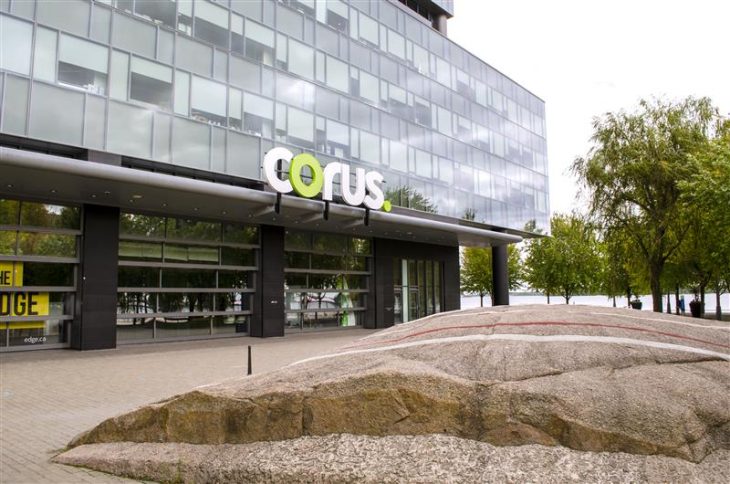
Corus Entertainment Inc. announced Thursday that it has completed the recapitalization transaction that will make it a subsidiary to a parent company holding its assets and controlled by its debtholders but guided by a board that includes a former Bell Media head.
In exchange for 99 per cent of Corus Entertainment Holdings Inc., the lenders – including Canso Investment Counsel Ltd. – forgave $500 million in debt hanging over the media company. The CRTC approved the transaction last month, conveying that the largest independent broadcaster is too important to the media and news ecosystem to fail.
“We are very pleased to complete this Recapitalization Transaction,” Corus’s CEO John Gossling said in a press release. “Our new capital structure provides a platform that positions Corus for new opportunities and future growth. As Canada’s largest independent broadcaster, we will continue to create and deliver premium content that Canadians want, and we will continue to invest in national and local news that Canadians depend on.”
The regulator pushed against the deal’s opponents who said they were concerned that Corus would now be in the hands of shareholders with no experience handling a media company. “Responsibility for directing the corporation, including its day-to-day operations and strategic decision-making activities, will rest with NewCo’s board of directors,” the CRTC said last month.
So, Corus announced Thursday the new board of directors, which will include Gossling.
Chairing the board is Maryann Turcke, who was the president of Bell Media from 2014 to 2017. Prior to that, she was the executive vice president of field operations for Bell Media from 2008 to 2014. Shen then went on to become the president of the National Football League media group from 2017, where she led the operations of the NFL Network and its linear TV, digital media and technology assets, product development, content strategy and marketing, according to her LinkedIn profile. She then became the chief operating officer of the NFL for two years starting in 2018, where she led the marketing, communications, HR, international, technology, events and club business development organizations, according to her profile. She then became a senior advisor for another two years at the league.
She is a board member of RBC Bank, digital sports media company Playmaker, telecom Frontier Communications in the U.S., and Diamond Sports Group.
“The new directors and I are excited to join Corus at this important time for the Company and for our industry,” Turcke said in the release. “Our priority is to continue to strengthen Corus’ leadership position in Canada by delivering news that Canadians trust and entertainment that Canadians love. We want to build a business that is resilient and will grow into the future, and look forward to working with all of our stakeholders to build a world class, sustainable, and independent media and broadcast industry in Canada, with Corus as a strong and successful player.”
Chairing the Operating Committee is Stuart Garvie, who has held senior leadership roles in media and advertising, including as former president of media sales and marketing at Bell Media from 2015 to 2017. During that time, he oversaw the strategic direction of the media division’s national advertising sales across all platforms. After that, he came the CEO of the Canadian division of advertising media buying company GroupM, which became WPP.
“Mr. Garvie has been involved in a number of media industry organizations, such as Numeris, and provides consulting and leadership services to clients in and around the industry,” the release added.
Chairing the Human Resources and Governance Committee is Erin O’Toole, former Conservative Party leader, current member of the prime minister’s Advisory Committee on Canada-U.S. Economic Relations, and president and managing director of ADIT North America, a risk advisory company.
“Mr. O’Toole holds a law degree and has deep public and private company transactional and governance experience,” the release said.
“As Canada’s largest independent broadcaster, Corus plays a vital role not just in the media industry but also in the fabric of Canadian culture and democracy,” O’Toole said in the release. “Corus creates and delivers independent, high-quality journalism and Canadian programming to millions across the country. I look forward to advancing work to modernize an investment and regulatory ecosystem that truly benefits independent media in Canada.”
Chairing the Audit Committee is Jeremy Walker, former TD Securities deputy chair and global head for the communications, telecommunications and media sectors, “where he led a global team providing strategic advice and capital markets execution services to cable, broadcasting, and digital infrastructure companies,” the release said.
“In addition to significant financial expertise, Mr. Walker brings nearly 35 years of industry, transactional and strategy experience, as well as governance knowledge, from his service as a director on several non-profit boards and private companies in the health sector,” it added.