Telecoms welcome report, but say more coordinated action is needed
By Ahmad Hathout
The Senate committee on transport and communications has heeded the recommendations of the telecommunications industry and is urging the federal government to amend the Criminal Code to impose harsher penalties for copper theft.
The report, titled Stolen Signal: The Costly Consequences of Copper Theft in Canada and released Tuesday, is also recommending the federal government create a task force on metal theft to promote information sharing among law enforcement agencies and encourage its provincial and territorial counterparts to regulate the sale of scrap metal, including by keeping a record of transactions and the origin of the metal.
“These crimes cause major service outages that could have serious consequences for the health and safety of the Canadian population,” the report reads. “Urgent action is needed to address this dangerous issue.”
The recommendations come after the House of Commons in February pushed forward Bill C-14, the Bail and Sentencing Reform Act, which proposes amendments to the Criminal Code including by adding a clause that creates an “aggravating circumstance” for courts to consider when an offence interferes with “essential infrastructure.” The Justice Department considers copper as part of essential infrastructure because it is critical to various sectors, including telecommunications, electronics, transportation and construction. The bill is currently making its way through the Senate committee on legal and constitutional affairs.
“Copper theft is not just a property crime—it’s a growing threat to public safety and critical infrastructure,” the Canadian Telecommunications Association (CTA) said in a statement to Cartt. “We welcome the Committee’s recommendations and agree that while Bill C-14 is an important step, more coordinated action is needed to deter theft and protect the networks Canadians rely on every day.”
The recommendations of the Senate transportation and communications committee are largely in line with the recommendations of the telecommunications industry, members from which sat before the committee in its first such hearing in December 2024 to urge them to take action on an issue they say has causes outages, costs millions of dollars, and threatens public safety and human life, including by disrupting 9-1-1 and Amber Alert services.
At the time of the hearing, Eric Smith, senior vice president of the CTA, said copper theft and vandalism had risen 200 per cent between 2022 and the beginning of 2024, affecting telecommunications services across the country.
The CTA had, by then, already recommended amending the Criminal Code to include harsher penalties for acts of vandalism or theft of critical telecom network equipment. The trade group, which includes among its membership Rogers and Bell, also recommended forcing businesses to collect copper sellers’ identification, not allow them to accept cash to induce a paper trail, and hold onto the metal for a buffer period to allow law enforcement to investigate.
Brian Lakey, Telus’s vice president of the Reliability Centre of Excellence, told the committee at the time that the situation can be especially dire in rural communities and said Canada needs a “dedicated metal taskforce, including coordinated investigations across law enforcement” and improvements in interjurisdictional information sharing.
“TELUS is in full agreement with the recommendations in their report,” the telco said in a statement to Cartt. “For TELUS, copper theft and other damage to critical infrastructure has increased by more than 45% in 2026, compared to 2025. These incidents disrupt emergency services, business operations, and the communication services that keep communities connected. TELUS continues to urge federal and provincial governments to take action and implement measures designed to address this growing issue.”
Innovation, Science and Economic Development (ISED) said it has awareness campaigns to help regular Canadians spot the theft in real-time and report them to Crimestoppers, and the RCMP said it is working with industry and provinces to increase reporting on the matter and to reinforce infrastructure to protect against the theft.
Bell’s Vice President of Public Affairs Michele Austin said at the time that copper theft was responsible for 88 per cent of the physical and security incidents that impact the telco’s network. Bell has spent millions of dollars on security, including installing aerial alarms, and has filed lawsuits against the thieves of the wire used to power services to its customers.
Last year, Bell said copper theft had increased by nearly 25 per cent over the year, with 500 cases that year and 2,270 since 2022.
Bell and Rogers deferred to the CTA’s statement when asked for comment.
Rogers said outages caused by vandalism can take three to four times longer to repair than other outages due to the extent of the damage and required repairs. The cableco said the total number of outage hours related to vandalism increased over 400 per cent since 2022.
The committee heard from an RCMP chief superintendent in Alberta who said copper theft is difficult to prevent for reasons including a lack of consistent provincial legislation on the matter across the country, the large geographic area where the sites are located, the difficulty in linking these metals back to the owner, and the evidence needed to prove the offence.
While Canada’s telecoms are transitioning from copper to fibre optic cables, Telus’s Lakey said the process is slow and, even when the transition is complete, thieves don’t necessarily know the difference between them – meaning they just end up stealing fibre optic cables.
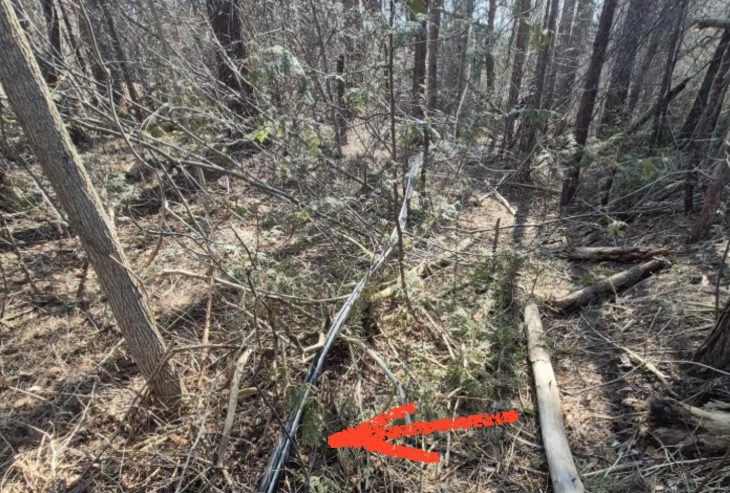
Photo via Ontario Provincial Police