By Christopher Guly
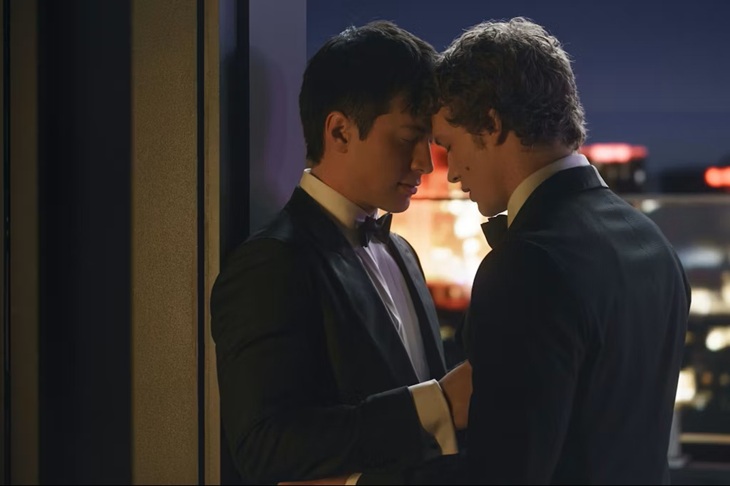
OTTAWA – As the CRTC brings foreign streamers under regulation via the Online Streaming Act, Bell’s Heated Rivalry is being viewed as an example of exportable Canadian programming that can thrive with enough investment in the Canadian broadcasting system.
The producers and two cast members of Bell Media’s Crave series along with Mark Carney – a first-ever appearance by a prime minister at a Canadian Media Producers Association (CMPA) Prime Time event – were the highlight Friday that shone a bright light on the six-episode TV series that has become a red-hot global phenomenon.
After walking a special red carpet with one of the lead actors of Heated Rivalry, Kelowna-born Hudson Williams, Carney said that evening in a speech that Jacob Tierney – the creator, writer, director and executive producer of the hit series – “did the right thing [and] smart thing. He came to Canada” to shoot the series.
Earlier in the day at a panel discussion, Tierney was asked by CMPA board chair Kyle Irving whether the Online Streaming Act could become a bargaining chip in the upcoming negotiations of the Canada-United States-Mexico Agreement (CUSMA), and replied that it would “be really, really bad if we lost it” and that “every country in Europe” has such legislation.
The requirement for major foreign platforms to make a five-per-cent contribution toward Canadian content – which such streaming giants as Netflix, Disney, Apple and Spotify have challenged in Federal Court – is not a “huge cost of entry,” said Tierney.
Brendan Brady, one of Heated Rivalry’s executive producers, welcomed more competition from streamers and said they would “have a global platform to create more Heated Rivalries.”
The following day, at a lunchtime and the final Prime Time panel, Bell Media president Sean Cohan was basking in the afterglow of the centre stage afforded the series.
He reflected on how his team had discussed “creating great” programming “and making an impact culturally around the world” and Heated Rivalry’s impact the day before “was really a validating moment, not just for us at Bell Media – and we’re just getting started.”
CMPA president and CEO Reynolds Mastin asked Canadian industry leader panelists about the future of the Online Streaming Act, particularly in light of comments U.S. Trade Representative Jamieson Greer made in December before a joint congressional committee on the upcoming review of CUSMA. He said the streaming law “discriminates against U.S. tech and media firms” and that a “resolution” of American concerns was imperative for a successful review of the trilateral agreement.
The law’s goal, said Cohan, is to “keep a relatively even playing field between strong Canadian players and folks that have a global footprint.”
“You’ve heard the prime minister talk really articulately about the role of the art that we create and the art that we all invest in, in the formation of a very strong Canadian identity – so let’s get on with it,” he said, adding that Bell Media is open to collaborations with such competitors as CBC and Rogers on Crave.
Cohan said that despite CanCon requirements, Bell Media makes “a ton of Canadian content and we will continue to, regardless of what those regulations are – and we actually exceed our obligations.”
Colette Watson, president of Rogers Sports and Media, agreed with Cohan. “We’re all overspent on our CanCon and that should tell you something,” she said.
Cohan said that Bell Media is “carefully monitoring” Netflix’s recent $72-billion US bid to acquire Warner Bros. Discovery’s studio business and streaming catalogue – a deal less ambitious than Paramount’s to acquire Warner Bros. in its entirety.
“We are watching what happens with competitive dynamics and when you consolidate so much IP [intellectual property] and market power in one player from outside Canada,” he said, and added later that Crave a “homegrown Canadian platform that is competing pound for pound pretty well with global streamers.”
“We’re also making a lot of originals with a lot of people in this room, and we’re buying from a lot of other people as well – and it’s not just Heated Rivalry.”
However, Corus CEO John Gossling said that the price of foreign content continuing to increase “only makes it harder for us to make Canadian content if we don’t have the margin from U.S. content.”
“Over time, we need to figure out a better Canadian model to be more profitable,” he said.
Mastin asked the panel what impact YouTube has had on them, and CBC/Radio-Canada president and CEO Marie-Philippe Bouchard said that the platform is a “means” to connect Canadian audiences and Canadian content but added a proviso.
“What we have learned through the experience of Meta pulling news from their platforms, we can’t rely on the rules not changing. So, we have to be diversifying our approach,” she said.
Watson said that “if using YouTube allows you to extend your interview, allows you to monetize or amplify a promotional opportunity to bring viewers to the larger, longer product – great, it’s awesome; it’s a tool that’s there at our disposal,” she said, and noted that Rogers community channels post programming on the video platform as a source of generating revenue.
Gossling said that Corus property Global News “is the biggest news channel on YouTube with almost five million subscribers.”
Monika Ille, CEO of Indigenous broadcaster APTN, addressed the future impact the Online Streaming Act could have on the communities her network serves.
“Indigenous content is a core priority along with French and English,” she explained. “Indigenous languages now have to be provided in the system. So, this changes everything for Indigenous media [and] Indigenous creators.”
“My major concern is being an Indigenous broadcaster. Talk about content, talk about creators, but what about the broadcaster [that] matters in this industry. Sometimes, I feel that we’re pushed aside. However, we’re the ones who are helping, fostering and nurturing the community.”
Or, if you’re the prime minister, you could also take a bow as Carney did on the Heated Rivalry night.
“I’m not above taking credit for the Canadian funding that helped you share this story with the world,” he said to the audience, drawing laughter. “I may not have been here when the decision was made, but I’m here now!”
Photo via Bell