Editor’s note: The minister took to X on May 7, 2026 to say the $6B was an “error.”
By Ahmad Hathout
Culture Minister Marc Miller told the Standing Committee on Canadian Heritage Tuesday that the implementation of a federal tax credit for broadcasting news could be worth as much as $6 billion.
The federal government’s spring economic update, released last week, includes a promise to hold a public consultation on expanding the Canadian Journalism Labour Tax Credit – currently reserved for written news – to the broadcasting sector.
“For me, it’s not a question of if, but rather of how,” Miller said in response to a question from Bloc Quebecois MP Martin Champoux about whether there will be such a credit, with the MP noting this has been an issue in discussion for years.
But Miller, appearing before committee to discuss department spending, conveyed that the configuration of the credit is not a simple task: “It’s not so easy to define a journalist when we talk about the written media as when we’re talking about online media or media rooms such as TV and radio,” Miller said. “Is it all people who work in the press room or is it the journalists themselves?” and “what are the ceilings that would be imposed on the biggest broadcasters?” were two example questions that the minister said will need to be determined for the tax credit, which will be implemented by the Department of Finance.
“It’s a tax credit that could be worth some $6 billion, so it’s no small amount and so we have to be careful,” Miller said.
Officials from Canadian Heritage, who appeared after Miller and noted the forecasted amount is determined by Finance, said they would provide more details to the committee as to how they came up with this $6-billion figure.
Kevin Desjardins, president of the Canadian Association of Broadcasters (CAB), which includes in its membership major private broadcasters, told Cartt the organization estimates the value of the tax credit to its own members would be closer to $100 million per year, “depending on how it is defined.”
“The value of the tax credit will depend on design of the program, including the percentage of salaries that can be claimed and the ceiling, much as the current Labour Tax Credit is applied to print media,” Desjardins added. “The existing program is valued at far less than the figure stated by the Minister.”
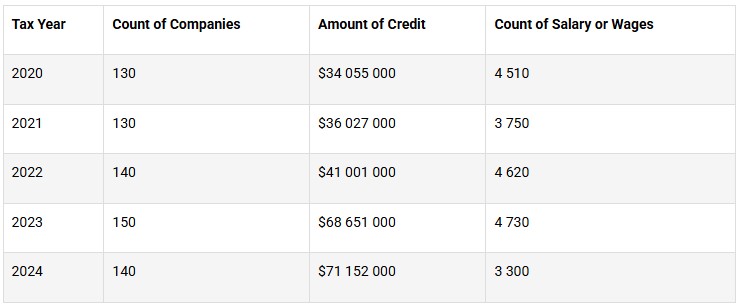
Value of the existing tax credit as of April 27, 2026, via the Canada Revenue Agency in response to an MP question.
The incentive program allows eligible newsrooms to claim a 35 per cent refundable credit on up to $85,000 in labour costs per employee per year for a maximum credit of nearly $30,000 per employee. The credit, which was introduced by the Liberal government in 2019, was increased 10 per cent in the spring of 2024 and is expected to return to 25 per cent for tax years beginning after this year, according to Finance.
Extending the credit to broadcast journalism has for years been a cornerstone of the lobbying effort of the CAB, which – alongside others in the industry – has been calling for and has been disappointed with successive budgets without such an extension.
“We believe this is an important step forward to support fact-based broadcast news, and to keep journalists in Canadian newsrooms,” Desjardins said last week.
“This commitment is an important step, coming at a moment when local news is facing an unprecedented financial crisis and broadcast newsrooms urgently need support. Private television and radio broadcasters remain the largest investors in original Canadian journalism, yet they are under significant financial strain.
“The CAB looks forward to engaging actively in this review to ensure that that the many roles and functions in the provision of broadcast news are properly reflected, and that the tax credit provides broad-based support to the broadcast journalism sector. Ensuring that all news organizations – regardless of platform – have access to equitable support is essential to sustaining trusted, local journalism for communities across Canada.”
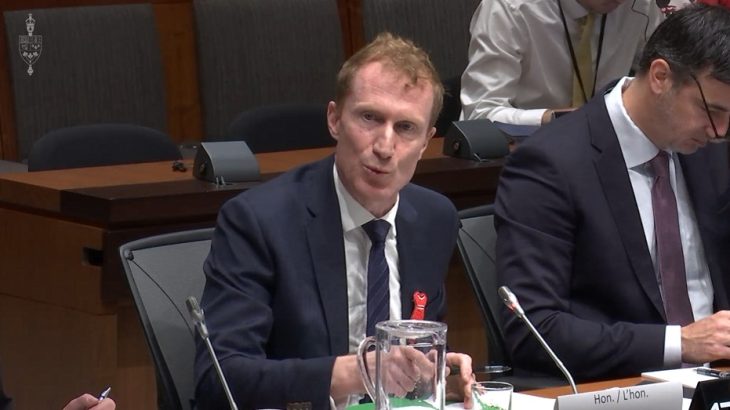
Screenshot of Culture Minister Marc Miller at the Standing Committee on Canadian Heritage on Tuesday