Social media driving engagement
By Christopher Guly
OTTAWA – With Canadian audiences viewing a plethora of content, a major focus for Canadian creators is to get their programming noticed, according to producers on a panel addressing discoverability at the Canadian Media Producers Association’s (CMPA’s) Prime Time annual conference in Ottawa on Jan. 30.
“Discoverability is an ongoing challenge, especially in this industry with so much content out there,” said Mark Montefiore, founder and CEO of New Metric Media. “How do you stand out in this ecosystem?”
His company is a producer of Hate the Player: The Ben Johnson Story, a Canadian comedy television series set to premiere on Paramount+ this year.
“We could put $100,000 into marketing and promotions, which is a lot of money for a small company. But that doesn’t do anything,” said Montefiore. He explained that at least the project has a recognizable name in former sprinter Johnson, who was stripped of his gold medals at the 1988 Summer Olympics after being disqualified for doping.
A study by consulting firm Nordicity, which was commissioned for the CRTC and released last month, recommended that the commission consider opening the Canadian expenditure obligation to include marketing and promotion expenses.
With Canadian audiences viewing content on multiple screens and platforms, “larger, smarter and longer-term investment” is required to “sustain interest from early development through release and into catalogue,” said the Nordicity report.
“Promotional investments drive audiences to seek the content, in seeking the content audiences enhance the prominence of content and its discoverability.”
In December, Quebec’s legislature adopted a law that in part respects “the discoverability of French-language cultural content in the digital environment” and provides for the creation of a Discoverability Office.
However, Anthony Farrell, CEO of Canfro Productions who wrote the screenplay for the Johnson series, underscored that artists need “creative leverage” for future projects, such as what Jacob Tierney, the creator of the hit series, Heated Rivalry, brought to the table from the “pedigree” of his past work as an executive producer of both the Canadian sitcom, Letterkenny, and its spinoff series, Shoresy. It helps when megastar Brad Pitt is a fan of both shows, noted Farrell.
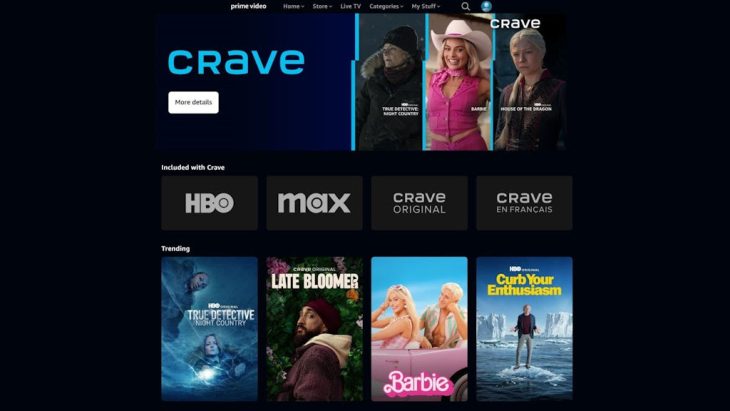
“On-set social media experts made a difference” in getting online buzz about Heated Rivalry, explained Veronica Graham, director of content strategy and curation at Bell Media, on whose Crave platform the series runs. She said that the broadcaster acquired 1.2 million followers – mainly in the United States – on social media in December alone.
To attract new audiences, New Metric created ShozerTV on YouTube, which features standup comedy and episodes of Letterkenny.
Beyond discoverability, Prime Time also looked at how Canadian companies are “powering global reach” and “owning the value chain,” and Shaftesbury with its long-running Canadian TV series, Murdoch Mysteries, ticked both boxes.
A study, commissioned by the CMPA and Shaftesbury and released last week, found that over 18 seasons, the series generated $1 billion in economic output in Ontario and $766 million to Canada’s GDP, and created 9,590 fulltime Canadian jobs.
Christina Jennings, president and chair of Shaftesbury, told the Prime Time crowd that a stage play and board game, based on Murdoch Mysteries, are in the works.
Lionsgate Canada is also thinking outside the box with its Hallmark mystery TV series, Mistletoe Murders, with plans to expand into a murder-mystery dinner theatre experience “and potentially a cruise and escape rooms,” according to Jocelyn Hamilton, president of TV at Lionsgate, who added that the team in Los Angeles is assisting with “influencer” dinners to broaden its “fandom” base.
Jennings stressed that the industry “has to make sure that the regulations in our country ensure that Canadian content is part of doing business for our Canadian broadcasters and streamers – and there is a lack of certainty in the market.”
“We’re all here as successful producers because the government of Canada and the provinces have believed in our industry in giving us tax credits.”
Some content producers have found success by finding their niche.
Launched in 2013, food channel, Gusto, produces all of its content in both English and Spanish, according to Gusto TV CEO Chris Knight.
“We’re a sticky channel,” he explained. “On Samsung, our average view time is 87 minutes.”
Knight said that unlike Heated Rivalry’s audience, which will tune into Crave to watch the show, Gusto’s viewers go to the channel without necessarily a particular show in mind.
“Most of our marketing is, if you love food, come and watch Gusto, as opposed to marketing individual shows,” he explained.
“We’re gay all day,” said Brad Danks, CEO of OUTtv Network, who joined Knight on a panel focused on specialty streamers.
He noted that OUTtv is in 16 markets – most recently in Thailand and the Philippines, which “has a huge love of drag content” – and plans to expand into Brazil and Mexico.
Danks said that the challenge for OUTtv, the world’s first LGBTQ+ TV channel and streaming service, is that there is less content available to purchase.
“Thet creates both an opportunity for us, but also a challenge, because it means we have to make much more of an investment in original programming,” he explained.
“One of the reasons we keep expanding our distribution is so we can monetize the content we make. As we say to producers, we don’t pay as much as others, but you can take risks with us, you can have more creative control and can do something that has global appeal.”
Danks told the conference that “most Canadian broadcasting was an acquisition-based business and it’s infinitely cheaper to acquire than it is to make your own content.”
“But everybody at some point has to worry about your content supply, and the way the streamers have come into Canada, that’s cut into that supply,” he said.
Original programming “is much harder to do, it’s more expensive. But at the end of the day you can build a bigger, sustainable business [that] you can’t [do] indefinitely on somebody else’s content.”