By Ahmad Hathout
The CRTC on Wednesday made projects focused on redundant networks eligible for Broadband Fund money.
The regulator confirmed a preliminary review that such projects, which ensure networks are backed up in cases of outages, should be subsidized. A resiliency project is defined by the commission as a second transport route “that provides a similar or greater level of capacity as the existing route but that is geographically or technologically diverse.” This can also apply to satellite projects.
“The benefits of high-speed Internet and cellphone services can only be fully delivered with reliable access,” the CRTC said in its decision. “Without it, online education, teleworking, and operating a business with remote customers are more challenging. Furthermore, unreliable access could limit access to critical health care and emergency services at a time when those services are needed most.
“Accordingly, the Commission considers that ensuring access to telecommunications services requires that these services be resilient,” it added. “High-speed Internet and cellphone services provide benefits, but those benefits can only be fully delivered if the services are resilient and users have confidence that they can rely on them.”
The CRTC also said it will defer consideration for expanding the fund to operating costs for projects beyond satellite, which are more expensive to maintain. The regulator reasoned that, given the limited funding available and the fact there are two outstanding proceedings that will affect this matter, it will “revisit” the question “in a future policy proceeding, if necessary.”
“Providing more operational funding under the Broadband Fund may create additional financial and administrative burden on the industry,” the CRTC said. “Expanding the scope of operational funding to a wider group of projects would likely increase the overall demand for funding. As a result, this approach would likely require diverting funding from other priorities or increasing the size of financial contributions.”
The CRTC will also maintain its $150-million annual distribution cap, meaning it will collect amount every year from the telecoms to fund these projects. Part of the reasoning is that “almost all funding contributed through the end of 2025 has been allocated to projects selected for funding. This demonstrates alignment between the strategic goals of the Broadband Fund and the amount of funding being collected and distributed.”
Large telecoms, including Rogers and Bell, have previously argued that the CRTC should reduce the amounts collected from them until the gap between what’s collected and distributed shrinks. Haven’t to put aside millions of dollars to be collected by the Broadband Fund when the administrator still has outstanding amounts left to give hurt their ability to plan and invest, the large telecoms argued.
Earlier this year, the CRTC overhauled how the fund collects money. Starting next year, companies will no longer be required to set aside that $150 million. Instead, at the end of the year, the regulator will forecast an amount it expects it will need for the next year based on the total amount of approved statement of work budgets up to $150 million, plus a $30 million contingency for “unexpected funding requests,” such as changes in project costs that it occasionally receives.
Under the approach, the CRTC said money for already-approved projects will be drawn from existing uncalled contributions – amounts the telecoms must be ready to deliver to the National Contribution Fund (NCF) when requested – “which is expected to reduce the amount of uncalled contributions over time,” the regulator said. Any amount of the contingency that is not used in the allocated year will be returned at the end of the year.
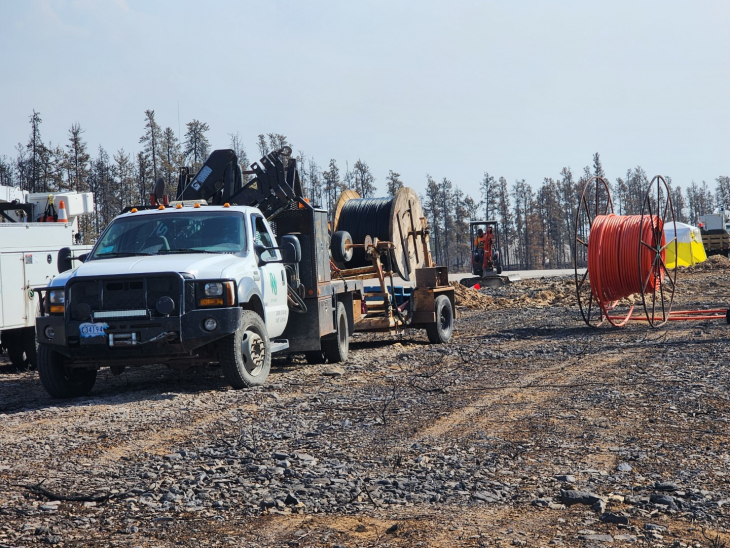
Photo via Northwestel