Crave subs top five million
By Ahmad Hathout
Bell executives said Thursday that the company will focus on trade-in and other “device residual programs,” rather than device discounting, to address affordability for consumers.
Bell reported wireless product revenue that was $555 million, down 6.6 per cent in the quarter against the equivalent period that ended June 30 last year. The company noted in its second-quarter earnings report that this was a result of lower wireless device sales to consumers “mainly from lower contracted activations due to a greater mix of bring-your-own-device [BYOD] activations and fewer upgrades, partly offset by reduced discounting and a mix shift to higher value handsets.”
To get more customers on service plans, executives emphasized Thursday that the telco will be focused on trade-in and residual programs, which Bell told us are financing structures where a customer’s monthly device payments are based on the device’s value net of its expected residual (resale) value, rather than the full retail price. This lowers monthly costs and, combined with trade-in, makes devices more affordable, the company said. This is opposed to hardware discounting where Bell absorbs part of the device’s cost (subsidy).
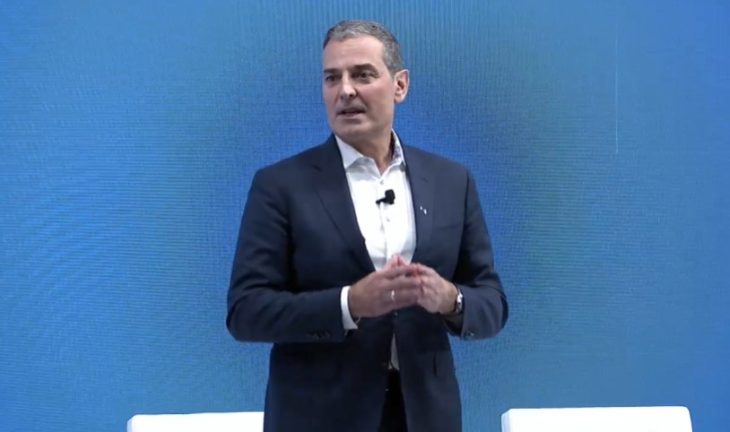
“The industry has to get back to [average revenue per user] and service revenue growth and that’s what’s going to allow us to continue to invest in the networks and in experiences that are going to drive value for consumers,” Bell CEO Mirko Bibic said on the company’s second-quarter earnings conference call Thursday.
Mobile monthly ARPU was $56.30 this quarter, down $1.31 or 2.3 per cent from the same period last year.
Bell, Rogers and Telus are currently fighting a CRTC crackdown on certain fees related to device handling and SIM cards. Bell, which is charging $40 for device handling, told the regulator that this cost is related to “fulfillment” associated with optional device purchases through Bell and has nothing to do with service plan activation, which is what the regulator is targeting under new fee rules.
Bell noted that the service revenues decline this quarter “reflected reduced wireless, wireline voice, and other wireline services revenues.”
Consolidated service revenues were up 4.3 per cent to $5.5 billion, while product revenues were down 16.3 per cent to $685 million.
The telco grossed 309,481 wireless subscribers in the quarter, down 6.6 per cent. It added 41,594 net new postpaid wireless subscribers, down 6.6 per cent over the year, for a total base of approximately 9.6 million by quarter-end. It grossed 164,158 prepaid subscribers, down 8.4 per cent, and added 16,033 net new prepaid subscribers, down 67.9 per cent, for a total base of 771,245.
Churn improved four basis points to 1.02 per cent.
On internet, Bell added 11,601 net new subscribers in Canada against the 4,612 it added last year for a total base of approximately 4.46 million. In the United States, Ziply added 6,132 subscribers for a total base of 445,525.
Bibic said Ziply is now in a “different growth phase” wherein it is starting to build out of its territory. “So we’re talking about permit submissions being up four times from April to June,” Bibic said. “Our state-level approvals have been obtained for 75 per cent of the 2027 location funnel … then you need the more local permit approvals. We’ve got high-level engineering complete for 60 per cent of the ’26-2027 funnel. We’ve got the contractor secured and the fiber supply secured.”
Bell completed the purchase of Ziply almost exactly a year ago. The acquisition expanded Bell’s fibre footprint into the U.S. by 1.4 million locations. It has a goal of reaching up to eight million fibre locations south of the border. The telco last year said the target was two million location in-territory and six million out, with a goal to connect three million homes by 2028.
After that, Bibic said Thursday that an mobile virtual network operator (MVNO) play is not out of the question.
“When we see that penetration gains are flatlining and perhaps a broader offering is needed to get to the next step-up in penetration, we’ll take a look at it,” Bibic said in response to an analyst question on that.
But he said Ziply’s fibre penetration “continues to be exactly in-line with historical and with the business case when we entered into this, so it’s looking good.”
While it lost 247 video subscribers in the U.S. for a base of 5,377, Bell added 8,741 video subscribers in Canada, up from the nearly 16,000 it lost last year, for a total base that was up 2.8 per cent to roughly. 2.16 million.
“We’ve made some tremendous improvements in our video offering with hardware-free TV and the streaming apps and the bundling, which is very attractive to consumers based on the take-up rates we’re seeing,” Bibic said. “You’re seeing a lower churn as a result, and our product intensity stats are continuing to improve.”
Bell Media revenue increased 8.9 per cent to $918 million due to higher advertising and subcriber revenues. Advertising revenue was up 5.3 per cent due to stronger advertiser demand for the FIFA World Cup, including higher digital video advertising revenue. Subscriber revenue increased 6.7 per cent, thanks to Crave and sports direct-to-consumer streaming subscriber growth, which was boosted by Canadian original content and the World Cup.
Crave topped five million subcribers by quarter-end, increasing 23 per cent year-over-year. It had 4.6 million by the end of 2025, the year it added more than one million subscribers.
Mobile connected device net activations were 45,589, down 53.2 per cent over the year, for a total base of approximately 3.4 million, down 6.8 per cent.
Total revenue in the quarter was $6.2 billion, up 1.5 per cent on a year-over-year basis. Net earnings were $629 million, down 2.3 per cent.
Screenshot of Bell President and CEO Mirko Bibic