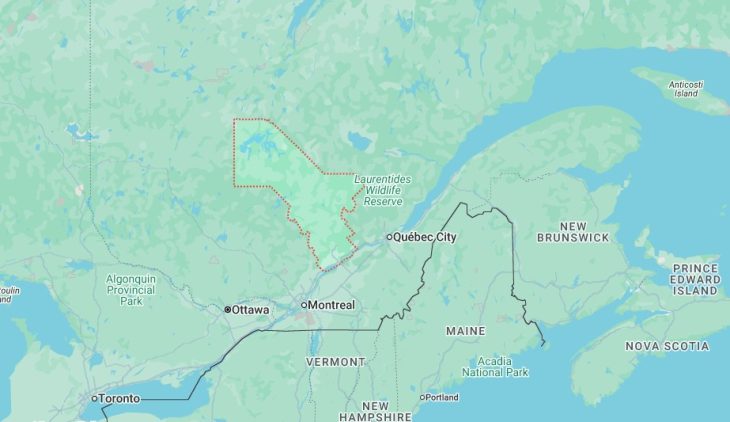
Innovation, Science and Economic Development (ISED) last week announced the completion of an $806,285 federally funded project with Bell to expand mobile connectivity along 28 kilometres of roadway in Obedjiwan (Atikamekw of Opitciwan First Nation) located in the Mauricie region of Quebec.
Funded through the federal government’s Universal Broadband Fund, the project was completed in June 2025 and is now providing service to the community, according to a press release last Friday from ISED.
Ensuring access to secure and reliable mobile connectivity for indigenous communities supports the federal government’s commitment to implement the Calls for Justice from the National Inquiry into Missing and Murdered Indigenous Women and Girls, which include a call for the funding of safe transit, transportation and infrastructure, ISED’s press release said.
“No one should have to worry about having a cell signal when they need help most,” Buckley Belanger, federal secretary of state for rural development, said in ISED’s release. “That’s why we’re investing to give people in Obedjiwan better cellular connectivity to stay safe, stay connected and access the services they rely on. It’s another example of how we’re working to support rural, remote and Indigenous communities.”
“Mobile connectivity plays a vital role in how people live, work and access emergency services,” Karine Moses, senior vice president of sales and vice chair, Quebec, at Bell, said in a statement. “Bell is proud to have partnered on this project to expand mobile service in Obedjiwan (Atikamekw of Opitciwan), helping strengthen connectivity for residents and travellers. Advancing how people connect with each other and the world is at the heart of everything we do, and this project reflects that commitment.”
The federal government’s $3.225-billion Universal Broadband Fund (UBF) includes a $50-million stream for mobile projects that primarily benefit indigenous communities. To date, nine projects to provide improved cellular coverage on more than 1,100 kilometres of road have been announced under the UBF, according to ISED’s press release.
Today, more than 99 per cent of Canadians have mobile coverage where they live, according to ISED, but gaps still remain in indigenous communities and along major highways and roadways.