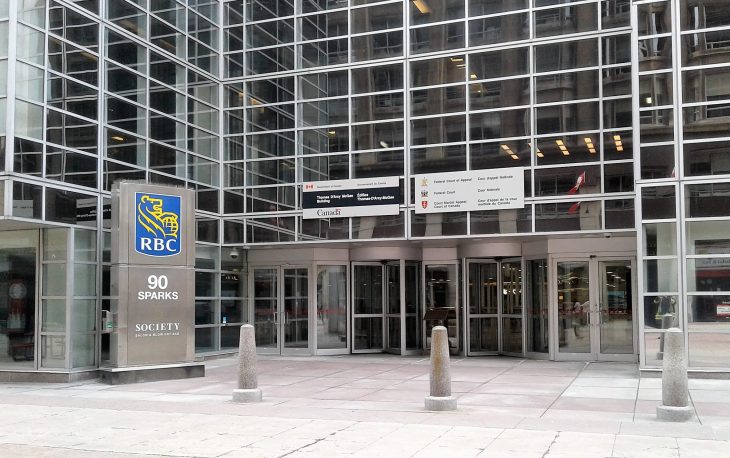
The Federal Court of Appeal will determine whether the CRTC must explicitly state that it has jurisdiction over long-distance call rates from correctional facilities.
The high court late last week agreed to hear the applications filed by Bell and the Ontario government, who argue that the CRTC twice failed to make clear that “forbearance from regulation” is itself an exercise in regulation and not an abdication of jurisdiction on those rates.
The court’s decision further suspends matters related to a proposed class action lawsuit that require an answer to the question to move forward. The suit was launched in Ontario Superior Court against Bell in February 2020 but later amended to include Ontario in the summer of that year. The class of plaintiffs is seeking retroactive financial relief for applicants who allege the telco – since replaced as the service provider for Ontario correctional facilities – charged “unconscionable” long-distance rates between 2013 and 2021. Bell and Ontario argue that these rates were set appropriately to match those charged to customers in the local community.
In late September, the CRTC rejected applications filed by Ontario and Bell that requested that the regulator make a decision on jurisdiction. By explicitly stating that the rates are within its jurisdiction, the applicants believe the CRTC would avoid a scenario where courts “interfere with telecommunications policy” and weigh the reasonableness of what those rates should be, which would give rise to conflicting outcomes.
The commission ruled that the issue was not central to its December 2024 decision, which determined that those call rates were forborne from regulation since 1997 and it did not have authority to retroactively adjust the rates charged by Bell in the class action period.
The regulator used the term “forbearance from regulation” in its December decision, stating in its follow-up determination in September that the phrase has been used by it and the industry for decades. But Bell and Ontario say this does not clarify the issue on which the Ontario Court of Appeal is seeking guidance to move onto next steps in the class action.
“This statement does not address what forbearance is and, most importantly, whether it is an exercise or exhaustion of jurisdiction,” Bell said in its leave to appeal application.
In its September decision, the CRTC said that the Telecommunications Act does not give it “authorities in exclusive terms,” concerned that definitely stating as much would preclude the courts’ jurisdiction to apply “laws of general application to rates charged by a telecommunications company.”
But Bell claims that the CRTC incorrectly applied “exclusivity” against the entirety of the Telecommunications Act, when it should have focused the issue against the relevant section (34) and its implications.
“The CRTC’s fundamental misunderstanding of the central issue before it led it to misconstrue Bell’s submission as being a request to determine whether the courts of Ontario have jurisdiction over the remedies sought from them,” Bell claims.
“A finding that forbearance is not (or is) an abdication of jurisdiction by the CRTC informs but does not usurp the Ontario courts’ determination of their jurisdiction,” the application reads. “This is a question that requires an interpretation of the CRTC’s home statute and is one that the CRTC is well placed to address.”
Bell says a decision on whether it exercises or relinquishes jurisdiction when it forbears has significance beyond this class action.
“The courts are unsure as to the legal significance of a forbearance decision by the CRTC, such that the Ontario Court of Appeal found it necessary to seek guidance from the CRTC,” the application reads.
“When that guidance is finally provided, it will impact all forborne services.”